
Eating the right foods is important—but eating at the right time can make just as much of a difference. Your body follows natural rhythms that affect digestion, metabolism, and energy levels throughout the day. A simple, realistic schedule for breakfast, lunch, and dinner supports better digestion, stable energy, and even weight-loss goals.
In this post, we’ll walk through the ideal eating windows, why they matter, and how to follow them in a way that feels natural to your lifestyle.
Breakfast — Your First Fuel of the Day
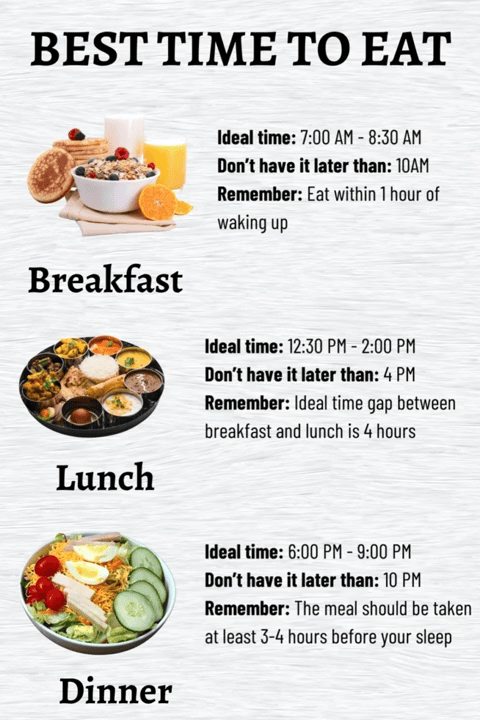
Ideal time: 7:00 AM – 8:30 AM
Don’t have it later than: 10:00 AM
Remember: Eat within 1 hour of waking up
Breakfast sets the tone for your entire day. Eating early helps stabilize your blood sugar, boosts metabolism, and gives your body the energy it needs to start strong.
Why breakfast timing matters:
-
Helps regulate hunger hormones
-
Prevents overeating later in the day
-
Improves mental focus and energy
-
Supports healthy digestion
Simple meal ideas:
-
Oatmeal with fruit and chia seeds
-
Eggs with whole-grain toast
-
Greek yogurt with berries
-
Smoothies with protein and fiber
Eating early doesn’t have to be complicated—just choose something nourishing to break your fast the right way.
Lunch — Your Midday Energy Boost
Ideal time: 12:30 PM – 2:00 PM
Don’t have it later than: 4:00 PM
Remember: The ideal gap between breakfast and lunch is about 4 hours
Lunch helps recharge your energy and prevent the afternoon slump. Eating within this window keeps your metabolism active and avoids long gaps that lead to overeating.
Why lunch timing matters:
-
Keeps blood sugar steady
-
Prevents cravings
-
Improves productivity and focus
-
Supports daily calorie balance
Balanced lunch ideas:
-
Lean protein + vegetables + whole grains
-
Buddha bowls with quinoa and chickpeas
-
Stir-fries with tofu or chicken
-
Salads topped with eggs, fish, or legumes
Aim for a meal that’s filling but not heavy, to keep energy steady through the afternoon.
Dinner — Light, Nourishing, and Early
Ideal time: 6:00 PM – 9:00 PM
Don’t have it later than: 10:00 PM
Remember: Eat dinner 3–4 hours before bed
Eating dinner too late affects sleep, digestion, and how your body processes calories overnight. An early, lighter dinner supports better rest and prevents nighttime bloating or heaviness.
Why dinner timing matters:
-
Helps reduce acid reflux
-
Prevents late-night cravings
-
Supports deeper sleep
-
Keeps metabolism aligned with your natural rhythm
Smart dinner ideas:
-
Vegetable soup with lean protein
-
Stir-fried veggies with tofu or chicken
-
Big salad with eggs or salmon
-
Light grain bowls with lots of greens
The goal is simple: eat early and keep it light.
Why Eating at the Right Time Helps
Timing your meals well can improve:
✔ Digestion
Your stomach works best earlier in the day.
✔ Energy
Even meal spacing prevents crashes and cravings.
✔ Sleep
Finishing dinner early reduces nighttime discomfort.
✔ Weight balance
Stable blood sugar keeps hunger controlled naturally.
✔ Metabolism
Regular meal timing helps your body burn calories more efficiently.
You don’t have to be perfect—just consistent.
Daily Eating Schedule Example
Here’s how a balanced day might look:
-
7:30 AM: Breakfast
-
12:30 PM: Lunch
-
6:45 PM: Dinner
-
Optional light snacks between meals if needed
This spacing supports stable hunger, steady energy, and better digestion.
Final Thoughts
Eating at the best times isn’t about strict rules—it’s about working with your body’s natural rhythm. Having breakfast within an hour of waking, enjoying lunch around midday, and keeping dinner early can improve digestion, reduce cravings, and help your body feel lighter and more balanced. Try following this simple timing guide for a week and notice how much better your energy and hunger feel.
Save this post for later, or start tomorrow morning by eating breakfast on time!