
If you love fruit but worry about sugar content, you’re not alone. Many people want to enjoy something sweet without spiking their energy or going over their daily sugar goals. The good news? There are plenty of delicious fruits that are naturally lower in sugar—and the pin you uploaded highlights some of the best options.
Today, we’ll break down nine fruits low in sugar, what makes them great choices, and how you can easily add them to your daily routine.
Why Choose Fruits Low in Sugar?
Low-sugar fruits aren’t just about eating fewer grams of sugar—they’re about enjoying fiber, antioxidants, and hydration without unnecessary calorie spikes. These fruits help you:
-
Maintain more stable energy
-
Support weight management
-
Reduce cravings for overly sweet snacks
-
Improve digestion with natural fiber
-
Stay full longer thanks to water-rich content
Now, let’s look at each fruit from the pin and how much sugar they actually contain.
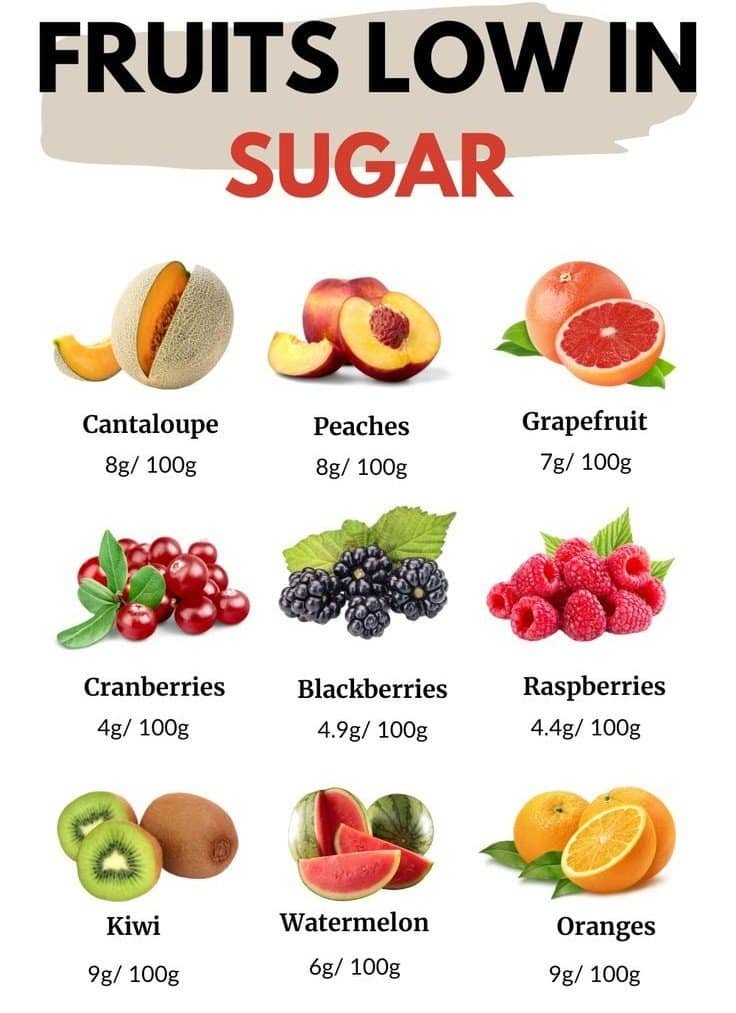
1. Cantaloupe — 8g sugar per 100g
Cantaloupe is naturally sweet, extra hydrating, and surprisingly low in sugar. It’s rich in vitamin A, which supports skin and eye health.
How to enjoy it:
-
Cube it into a fruit bowl
-
Blend it into a refreshing smoothie
-
Pair it with Greek yogurt for a high-protein snack
2. Peaches — 8g sugar per 100g
Peaches taste like dessert but still fall into the low-sugar category. They’re high in antioxidants and great for digestion.
Quick peach ideas:
-
Slice over oatmeal
-
Grill for a soft, caramelized treat
-
Add to iced green tea for natural flavor
3. Grapefruit — 7g sugar per 100g
Grapefruit is famous for being both refreshing and low in sugar. It’s also rich in vitamin C and can help stimulate digestion in the morning.
Try this:
-
Eat half a grapefruit with breakfast
-
Add slices to infused water
-
Toss into salads with mint and cucumber
4. Cranberries — 4g sugar per 100g
Fresh cranberries are one of the lowest-sugar fruits available. Their tart flavor makes them great for blending or cooking.
Ways to use cranberries:
-
Add to smoothies
-
Make a low-sugar homemade cranberry sauce
-
Bake into healthy breakfast muffins
(Note: dried cranberries often have added sugar — fresh or frozen is best.)
5. Blackberries — 4.9g sugar per 100g
Blackberries add a deep, rich flavor with minimal sugar. They’re also loaded with fiber—one cup contains nearly 8g!
Great uses:
-
Add to chia pudding
-
Mix into overnight oats
-
Eat as a simple handful snack
6. Raspberries — 4.4g sugar per 100g
Raspberries are light, tart, and incredibly filling thanks to high fiber. They have one of the lowest sugar contents among all berries.
Enjoy them:
-
On top of yogurt
-
Blended into smoothies
-
Mixed into a low-sugar granola bowl
7. Kiwi — 9g sugar per 100g
Kiwi adds a bright, tropical flavor while still staying under 10g of sugar. It’s high in vitamin C and excellent for digestion.
Try kiwi:
-
Sliced on toast
-
Blended into a green smoothie
-
Eaten whole—yes, even with the skin! (It’s edible and full of fiber.)
8. Watermelon — 6g sugar per 100g
Watermelon may taste sweet, but it’s actually low in sugar and extremely hydrating due to its 92% water content.
Ways to enjoy:
-
Cut into cubes and chill
-
Blend for a natural “slushie”
-
Pair with mint and lime for a summer treat
9. Oranges — 9g sugar per 100g
Oranges offer sweetness with balance. Their fiber helps slow digestion of sugar, and the vitamin C boost is a major bonus.
Simple serving ideas:
-
Eat as an afternoon pick-me-up
-
Add slices to a salad
-
Make a citrus salsa for grilled chicken or fish
How to Add Low-Sugar Fruits to Your Daily Routine
Adding these fruits to your meals doesn’t have to be complicated. Here are some easy ways to keep sugar low while enjoying natural sweetness:
1. Build a low-sugar fruit bowl
Combine blackberries, raspberries, cantaloupe, and kiwi for a fresh, colorful bowl.
2. Swap desserts for fruit + protein
Try peaches with Greek yogurt or raspberries with cottage cheese.
3. Make infused fruit water
Add slices of grapefruit, orange, or watermelon for flavor without sugar.
4. Blend smarter smoothies
Use low-sugar fruits as your base instead of bananas or mangoes.
5. Meal prep fruit snacks
Prepare grab-and-go containers with kiwi slices, berries, or melon cubes.
Final Thoughts
Choosing fruits low in sugar doesn’t mean giving up sweetness — it just means making smarter choices that support your energy, digestion, and cravings. With options like blackberries, grapefruit, cantaloupe, and raspberries, you can enjoy delicious flavor every day without worrying about sugar overload. Save this list, experiment with new combinations, and enjoy fruit in a balanced, refreshing way.
Pin this post for later or share it with a friend who’s looking for healthier fruit ideas!